You’re buying a house. There’s an old fence in the backyard. Maybe it leans a little. Maybe it doesn’t line up with the neighbor’s fence. Before you close, it helps to know what that fence really tells you about the property.
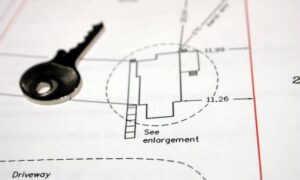
A loan closing survey is a tool your lender may require before funding your loan. It shows where the home and other big features sit compared to the property lines. If there’s an old fence on the lot, this survey can put your mind at ease. Or it can flag something worth a second look before you sign anything.
When an Old Fence Does Not Match the Property Line
An old fence often goes up where it looks convenient, not where the real boundary sits. Over time, the gap between “where the fence is” and “where the line actually runs” can grow.
Fences shift as they age. Wood posts rot and lean. Ground settles unevenly, especially where the soil is soft. A fence built straight 20 years ago might now sit several inches off its original spot. Sometimes a past owner built the fence a few feet inside or outside the real line. This can happen by mistake, or just because it fit their yard better at the time.
None of this means something went wrong. It happens often. It doesn’t mean there’s a dispute or a legal problem. But it does mean you shouldn’t assume the fence marks your true property line just because it’s been there for years.
What a Loan Closing Survey Can Reveal Around the Fence
A loan closing survey compares real features on the ground, like fences, buildings, and driveways, against the property’s recorded boundary. If the fence lines up with the boundary, the survey shows that. If it doesn’t, the survey shows that too.
This matters because your lender and title company use the survey to confirm what they’re financing. If the fence sits well inside the line, you might be giving up yard space you thought you had. If it sits outside the line, part of the fence could technically sit on the neighbor’s land. That can lead to an awkward conversation later if the neighbor decides to build or fence their own side.
The survey won’t say who has to fix a misplaced fence or who pays for it. It just shows where things stand right now, compared to the recorded lines. What you do with that information is up to you.
Fence Offsets That Deserve Attention Before Closing
Not every gap between a fence and a property line is a big deal. A fence a few inches off the line usually isn’t worth much worry. But a few situations do deserve a closer look.
A large offset, several feet or more, is worth asking about. That much distance suggests the fence went up without much attention to the real boundary, or the property has a more tangled boundary history than you’d expect.
A fence that appears to cross onto the neighbor’s lot is also worth addressing. It could affect how much yard space you actually get to use. And if the fence runs near a utility easement or a drainage path shown on the survey, that’s worth understanding too. It can limit what you’re allowed to build or plant near that fence line later.
If your loan closing survey shows any of these situations, ask questions before you finalize the purchase, not after.
Questions to Resolve Before Accepting the Survey at Closing
Before you sign off on the survey, ask a few questions.
Does the fence’s spot match what the seller told you, or what you saw in listing photos? Sellers often don’t know the exact boundary either, so a mismatch doesn’t always mean they were hiding something. It’s still worth asking about.
Is the offset big enough to change how you plan to use the yard? If you want to add a shed, pool, or new fence later, knowing the real boundary now keeps you from building in the wrong spot.
Does the survey show the fence crossing onto a neighboring lot, or a neighbor’s structure crossing onto this one? If so, ask your agent, attorney, or title company how that’s usually handled before you close.
Did the surveyor note anything about the fence’s age or condition compared to the boundary evidence they found? That note can help you tell a longstanding, low-risk situation from something that needs a real conversation with the seller.
Getting clear answers now is a lot easier than sorting these things out after you already own the home.
Why New Orleans Fence Conditions Need a Closer Look
New Orleans properties come with a few things that make fence placement worth extra attention. The city’s soil is soft and settles unevenly in a lot of neighborhoods. That means fences here often shift more than they would on firmer ground. A fence built level and straight can end up leaning or drifting within just a few years.
Many lots also sit close together, especially in older neighborhoods. That means even a small boundary gap can eat up a real chunk of usable yard space. A lot of the housing here is older too, so fences may have been rebuilt or replaced more than once over the years. Sometimes nobody rechecks the original boundary when that happens.
This doesn’t mean every property has a fence problem. It just means a loan closing survey carries a little more weight here. It gives you a current, accurate picture instead of relying on a fence that may have moved more than it looks.
Frequently Asked Questions
Can a home appraisal replace a loan closing survey?
No. An appraisal looks at the property’s value for lending purposes. It doesn’t check where the boundaries fall or how the home and fence relate to those lines. That’s a different job than what a survey does.
Should the seller’s old survey be used for a new home purchase?
An older survey can give you helpful background. But whether it works for your purchase depends on things like whether anything has changed since it was done, and whether your lender or title company wants a current one.
Can a buyer request additional surveying after reviewing the closing survey?
Yes. If the survey raises a question about the fence or the boundary that isn’t fully clear, you can talk with the surveyor and other parties about whether more work makes sense before closing.